COMPUTATIONAL HUMANITIESR / 01
Rhythm, language & meaning in Latin texts
Computational approaches to cadence and interpretive patterns in Latin religious writing, connecting classical studies with questions about cognition and expression.
I'm Bolor, a student researcher and writer from Mongolia, interested in the space where cognition, language, history and human belief meet.
My work begins with a question: why do certain words, rituals, stories and symbols matter so deeply to us?
Growing up between urban life in Ulaanbaatar and summers in Mongolia's countryside gave me different ways of encountering the same culture. That contrast informs my interests in anthropology, language and the mind.
Across independent research, neuroscience education and cultural projects, I try to combine close attention to human experience with careful evidence—and make what I learn useful to others.
Research questions that cross the boundaries of conventional subjects.
Computational approaches to cadence and interpretive patterns in Latin religious writing, connecting classical studies with questions about cognition and expression.
Engagement with an academic manuscript examining short-term autonomic measurements in a study of 1,144 adults. Contributions and authorship require supervisor confirmation.
A digital exploration of how belief, language and cultural practices intersect with cognitive science. An independent project bringing interpretive questions into an interactive format.
An independent software project exploring cognitive questions around ritual and interpretation. A repository has been supplied; its feature set and any user-testing figures still need independent documentation.
Publication, authorship and journal statuses are described conservatively until independent records can be linked.
Turning research interests into educational and cultural projects.
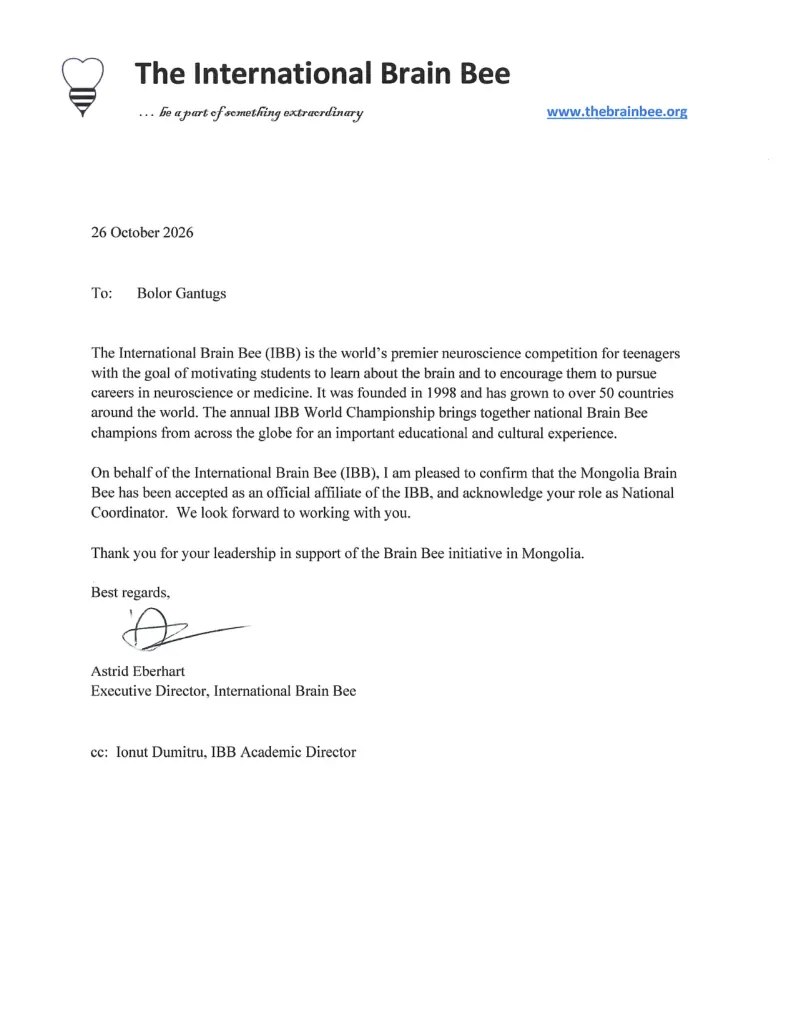
National neuroscience education initiative. A letter dated 26 October 2026 from the International Brain Bee acknowledges me as National Coordinator and confirms official affiliation for Mongolia’s national Brain Bee.
An initiative connecting interest in classical languages with accessible learning, translation and cultural dialogue in Mongolia.
A multilingual digital guide to ger etiquette and respectful interactions with Mongolian host families. A Juulchin Tourism Corporation letter dated 18 August 2026 reports that 166 travelers used the guide and highlights its Japanese, Chinese and Korean translations.
During a 180-hour paid field internship, I worked on cultural-resource screening and predictive mapping informed by herder oral histories. A dated employer letter documents this work; the signed original is retained privately.
A Buryat–Mongolian translator prototype with a sample dictionary and children's stories. Translation opens Google Translate; seven example word pairs and twelve Mongolian-only story drafts await language review and translation.
Essays, creative work and inquiry outside conventional research formats.
An artistic inquiry into how symbolic images invite interpretation, pattern recognition and storytelling.
View record →A writing project exploring intersections among cognitive questions, religious texts and human meaning.
View record →Academic competitions, collaborative scholarship, a completed online sociology course and other experiences.
View records →Selected photographs from international academic competitions and student-led events.
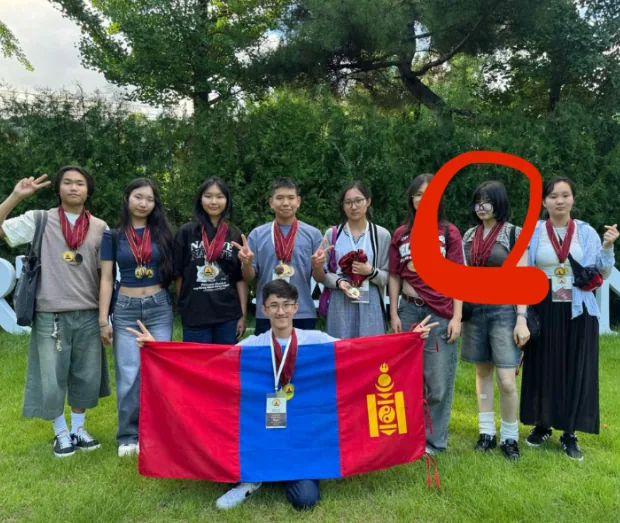
These are event and participation photographs supplied for this personal portfolio. They offer visual context, not independent verification of an award, ranking, organizer position or event attendance record.
Mongolia delegation and event photographs.
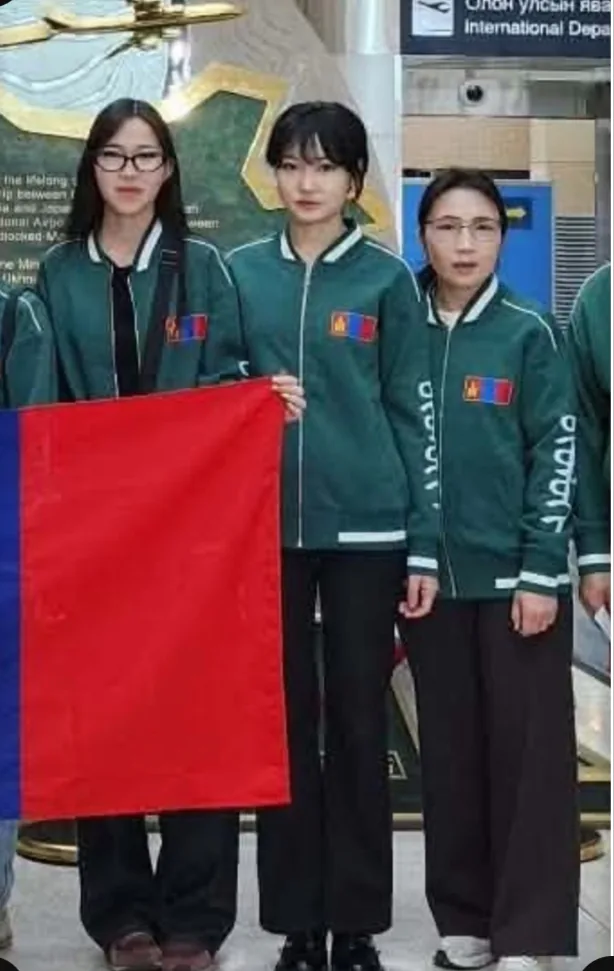
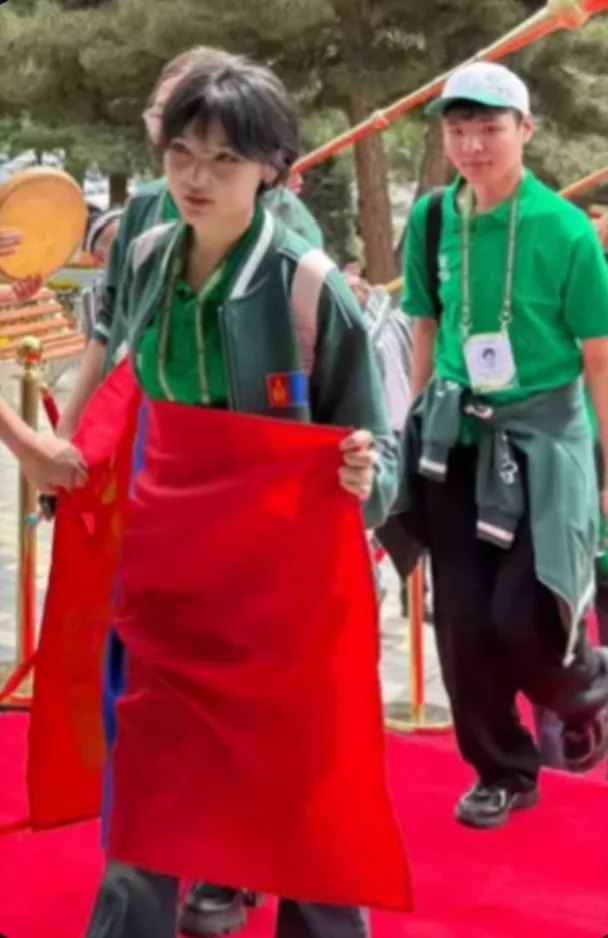
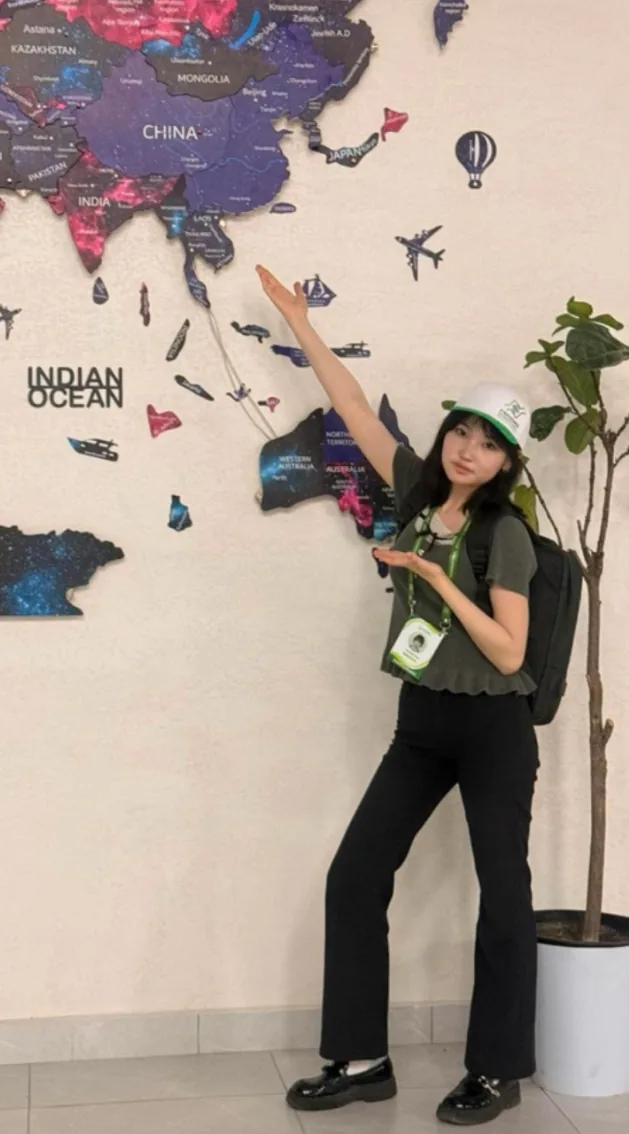
Team photographs and competition keepsakes. Placements require official results.
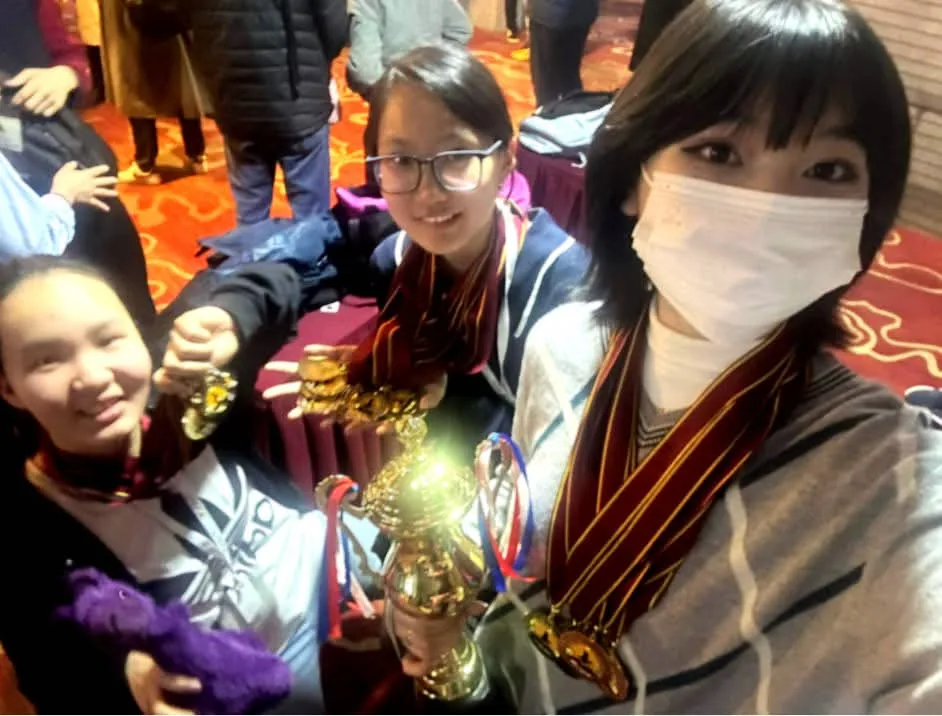
Conference gathering and a supplied UNGA co-chair portrait graphic.
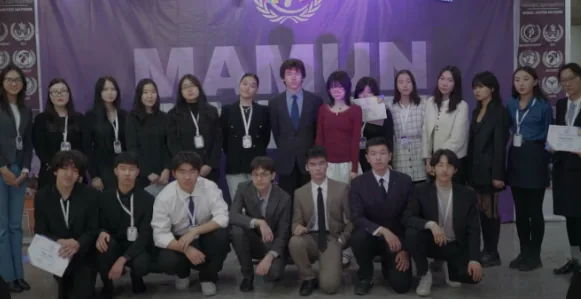
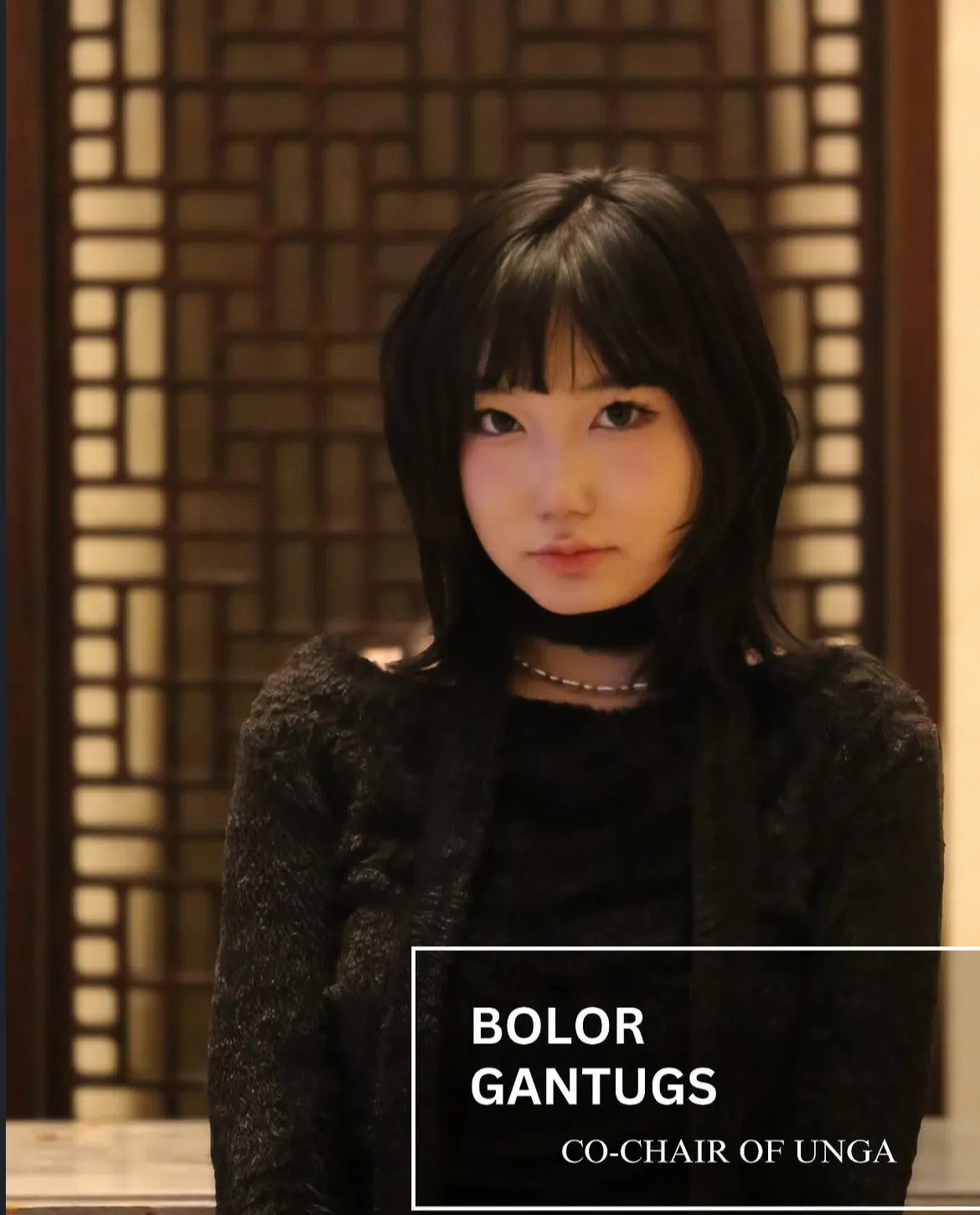
Portraits and group photographs are presented as visual context. Official awards, rankings, leadership titles and dates should be verified through event organizers' own records.
A public record of what has been documented, what is still in progress, and what requires independent confirmation.
A live project page documents a project; it does not, by itself, establish institutional endorsement or verify every claim. A third-party letter, official result, journal article, or institution-authored page provides stronger external support. Some signed originals are kept private to protect personal details. Entries below make this distinction explicit.
A letter addressed to Bolor Gantugs, bearing International Brain Bee letterhead and the name/signature of Executive Director Astrid Eberhart, confirms that the “Mongolia Brain Bee” was accepted as an official IBB affiliate and acknowledges Bolor as National Coordinator.
What this verifies: official IBB affiliation and the National Coordinator role stated in the letter. It does not independently verify founder status, event participation figures, or competition results. The scanned letter is reproduced unaltered; confirm public-sharing permission before deploying.
 VIEW ORIGINAL DOCUMENT ↗
A dated IBB letter addressed to me confirms the national Brain Bee’s acceptance as an official affiliate and identifies me as National Coordinator. The letter uses the name “Mongolia Brain Bee.” Separate records are still needed for my founder title, participant numbers, and competition outcomes.
A link to an OSF project record has been provided for my research portfolio. Its specific contents, authorship and version history still need to be checked directly. A separate essay is being prepared for Ephebeia; journal publication should only be described as completed when an official article page is available.
A cross-sectional manuscript examines reference values among 1,144 Mongolian adults. Final author listing, personal contribution and submission status require direct confirmation from the research supervisor.
The project repository is linked as a direct route to the code and development materials. Repository ownership and technical contents were not independently inspected during this update; outside reviews, usage metrics and third-party adoption remain separate questions.
A public GitHub repository address was supplied for this separate software project. The linked repository offers a route for reviewing source materials; functionality, study design and engagement figures have not yet been independently verified.
Founding history, translation samples, workshops and acknowledgments from collaborators should be linked to independently document the association's activity and reach.
A letter dated 18 August 2026 on Juulchin Tourism Corporation letterhead states that 166 travelers used my Ger Protocol guide during their journeys in Mongolia. The company describes distribution through QR codes on welcome cards, pre-departure digital itineraries and lead tour guides. It also highlights the value of Japanese, Chinese and Korean translations in communicating Mongolian customs. These are claims documented in the supplied letter, not independently audited usage statistics.
Accessible beta at bolorgantugs.com/undes/: seven illustrative, unreviewed dictionary entries and twelve AI-assisted Mongolian story drafts awaiting editing and Buryat translation. Translation opens an external Google Translate window; there is no independent, validated in-app translation service yet. Not a verified bilingual corpus or completed children's book library.
Personal photographs show medals, a trophy, a Mongolia group photo and participation context. They do not independently establish an official placement or medal total. Event-issued certificates and rankings will be added when available.
Biology, chemistry and mathematics competition participation. Exact event titles, placements and award levels will be listed alongside authentic issuing-body records.
A letter dated 4 July 2025 from Litho Drilling LLC's Field Exploration Division records a one-month, 180-hour paid internship at the Kharmagtai Project. The supervisor credits me with contributions to a Cultural Resource Screening Protocol and a predictive mapping tool incorporating local herder relations and oral histories. The letter states these approaches were being integrated into other programs. The signed scan is not posted publicly because it includes compensation details and a personal signature.
Writing and interpretation at the intersection of religion and cognitive science. Add dated, original published samples and third-party editorial documentation where applicable.
Visual exploration of symbolic language and interpretation. Add a selection of original cards with dates and a short description of artistic and intellectual process.
Saylor University certificate of achievement issued 20 October 2026 to Bolor Gantugs. The document records 31 course hours, 3.1 continuing education units and a 94.12% grade. Certificate ID: 2676465962BG.
Three supplied photographs are presented in the gallery as visual documentation associated with AIBO, including images featuring Mongolia's flag and team jackets. These do not establish an official result, medal or student registration record.
A group photograph and a portrait graphic labeled “Bolor Gantugs — Co-Chair of UNGA” document the event visually. The graphic alone is not third-party confirmation of the role; an organizer announcement or event program would be stronger evidence.
I'm interested in thoughtful exchanges across cultural research, language education, neuroscience and the humanities.
Email Bolor